Refugee aid in eighteenth century Sweden, Part I: The state organised refugee aid
This is the first in a two-part Refugee History blog post. It is based on ongoing research within the project Humanitarian Great Power? The local reception of refugees in Sweden 1700-1730, funded by the Swedish research council.
Questions around who is considered a refugee, and their resulting claims to protection, have varied significantly across time and space. While the modern refugee regime is defined by the 1951 Geneva Convention, ideas about refugee protection in Europe go back to the 16th century and the displacement of religious minorities following the Protestant Reformation. The Swedish term for “refugee” – Flykting – first appeared in official state documents in the early 18th century, to describe people from the eastern borderlands of the realm seeking refuge in mainland Sweden during wartime. As Swedish subjects displaced within the Swedish realm, these people would not qualify for refugee status according to modern legal definitions, but their experiences represent the starting point for official debates about refugee protection in Sweden. As such, their case allows us to historicise the development of ideas of refugee protection, from early modernity to today, whilst highlighting continuities in the challenges facing authorities and receiving communities alike. The Swedish crown’s early efforts to organise refugee relief show how ideas of state responsibility for vulnerable migrants evolved in the early modern period; they also illustrate the material and cultural factors shaping the effectiveness of government relief programmes.
The making of a refugee crisis
By the end of the 17th century, the Swedish realm was an empire straddling the Baltic Sea. This imperial project came crashing down with the Great Northern War (1700-1721) when Sweden faced a coalition of neighbouring states, headed by Russia under Tsar Peter I. As Russian forces occupied the Baltic provinces and the Finnish half of the realm, Swedish subjects fled these areas to seek refuge in the western parts. In total, approximately 20,000–30,000 people made their way by foot or boat to what is now the east coast of modern-day Sweden.
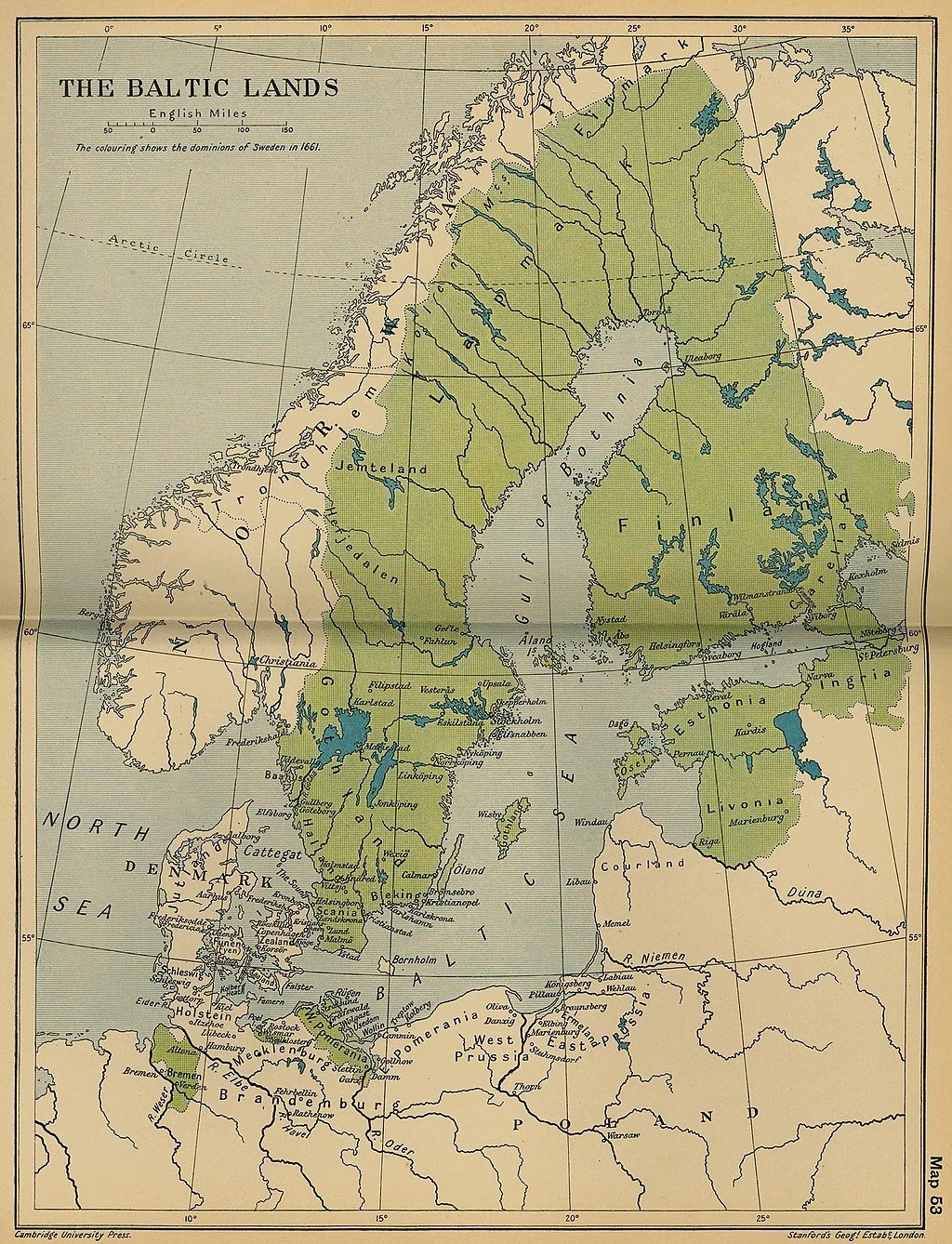
The Swedish empire by the end of the 17th century. Source: Wikimedia Commons
This was not the first time that people from the borderlands had fled to more secure regions in times of war, but two factors combined to create an entirely new situation. First, the unprecedented scale of the war meant that the number of wartime migrants was far larger than ever before. While the first wave of displaced people were supported within local frameworks of municipal welfare and private charity, these traditional institutions quickly became overwhelmed as the numbers of needy grew. Second, developing ideas of legitimacy and Empire shaped perceptions of the crown’s responsibility towards the provincial population. In November 1711, the Swedish king commanded all his subjects to leave the occupied provinces, to prevent their possible abduction to Russia. Aside from these paternalistic concerns, depopulating a region was a typical wartime strategy at the time to obstruct the enemy. As the provincial subjects fled on his orders, the king promised that they would receive protection in Sweden.
Following the royal decree, the crown became increasingly invested in protecting displaced subjects from the provinces, giving them privileges such as the right to free lodgings, exemption from military conscription, and certain exemptions from local economic regulations. It was in these contexts that the crown increasingly began to refer to them as “refugees” (Flyktingar).
The Refugee Commission
In 1713, the king formalised state responsibility for refugee protection by creating the “Refugee Commission”(Flyktingkommissionen). Based in Stockholm, this committee, consisting of three representatives each from the nobility, the clergy and the burghers, was mandated to coordinate national relief efforts for the refugees. Its task was to ensure the proper use of available relief funds and the fair distribution of economic support.
The main problem facing the new committee was funding. The increasingly desperate war effort meant that the Commission received no state funds for its operation. Instead, the king mobilised the charitable work of the Lutheran state, based on the calculation that people would find it more acceptable to make voluntary contributions than to pay new taxes. Accordingly, all parishes of the realm were instructed to annually organise six charitable collections in the name of refugee aid. The Commission would pool all donations in Stockholm and subsequently redistribute the money to the various regions of the realm.
From day one, the Refugee Commission ran into impossible logistical challenges. The government had severely underestimated what was needed for the transfer of funds. Coordinating transfers from the parishes to the capital proved time-consuming and the expenses for transporting the physical coins consumed significant portions of the donated funds. These realisations motivated pragmatic revisions to the organisational structure of the relief. Instead of the Commission redistributing its funds to the provinces – where many refugees lived – refugees now had to travel to Stockholm to present their claims and receive a share. Thus, despite its national mandate, the activities of the Refugee Commission became localised within the capital. As a result, the commissioners’ workload ballooned, as they had to assess every individual aid application themselves rather than delegating the task to the regional authorities. Several consecutive commissioners ultimately quit their posts from physical and emotional exhaustion. Despite their serious efforts, the aid was inadequate. Available funds were too limited and over time fundraising campaigns yielded dwindling results. Many refugees could not travel to Stockholm to apply for aid and life in the capital was expensive for those who did.
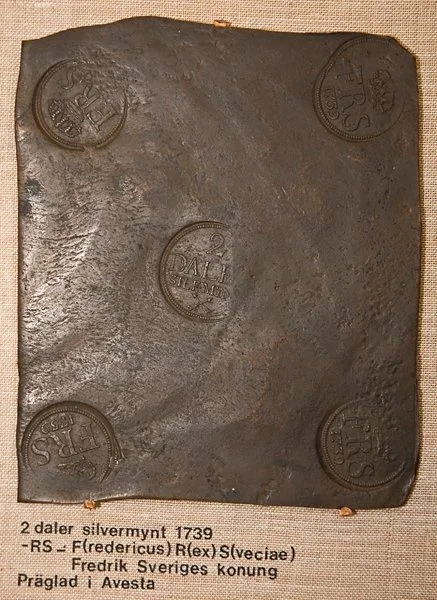
Swedish 18th century copper plate coin. Source: Wikimedia Commons
Relief efforts were also shaped by the inherent social inequality of early modern society. As hierarchies were considered fundamental to the social order, the king and his ministers were deeply troubled by the sight of dispossessed and destitute members of the provincial elite. They saw it as imperative to help this group maintain their social superiority, as failure to do so would threaten the very fabric of social order. These ideological concerns became crucial in defining the notion of deservingness. Criteria for the “fair” distribution of aid included some consideration of the refugee’s social status and how much property they had lost. As a result, a relatively small group of provincial elites collected the lion’s share of distributed funds, while most refugees received little to no money. This was a conscious feature of the relief organisation – not a bug.
***
The Refugee Commission faced many of the same challenges as relief organisations in modern times. The unstable foundation of its funding structure, its dependency on patchy infrastructure and its rudimentary technology for collecting donations and distributing aid all severely confined the scope of the Commission’s work – limiting the refugees’ ability to access relief.
At the same time, the Commission’s work underlines how notions of state responsibility have changed since early modern, shaping not just refugee protection but the very concept of the refugee. The refugees of 18th century Sweden could claim state protection precisely because they were subjects of the Swedish empire. The state’s responsibility for protecting subjects displaced by war was an exception to concurrent norms. In early modern society, welfare and migration control was organised on the local level. The efforts to protect refugees from the occupied imperial provinces thus underline the absence of national welfare institutions, but this responsibility was also heavily informed by the social hierarchies permeating early modern society. By contrast, modern concepts of citizenship and the nation-state generate notions of much more universal and far-reaching state responsibility for all citizens. Graded responsibility based on social class has been replaced by a binary between citizens and non-citizens. Consequently, the challenge of the modern refugee regime is to identify which migrants have a claim to state responsibility despite not being members of the polity.