Ukrainian Displaced Persons and the Brazilian Aid Committee after the Second World War
“Only you, brothers, can help me. We went to the doctor many times. They say that only fresh air and good nutrition are the best aid and medicine. We have plenty of air, but there is almost no food”
Michalenko – Letter from a Refugee
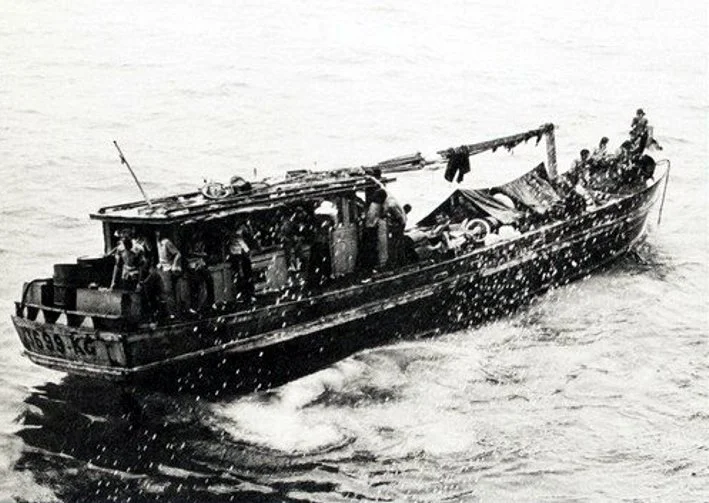
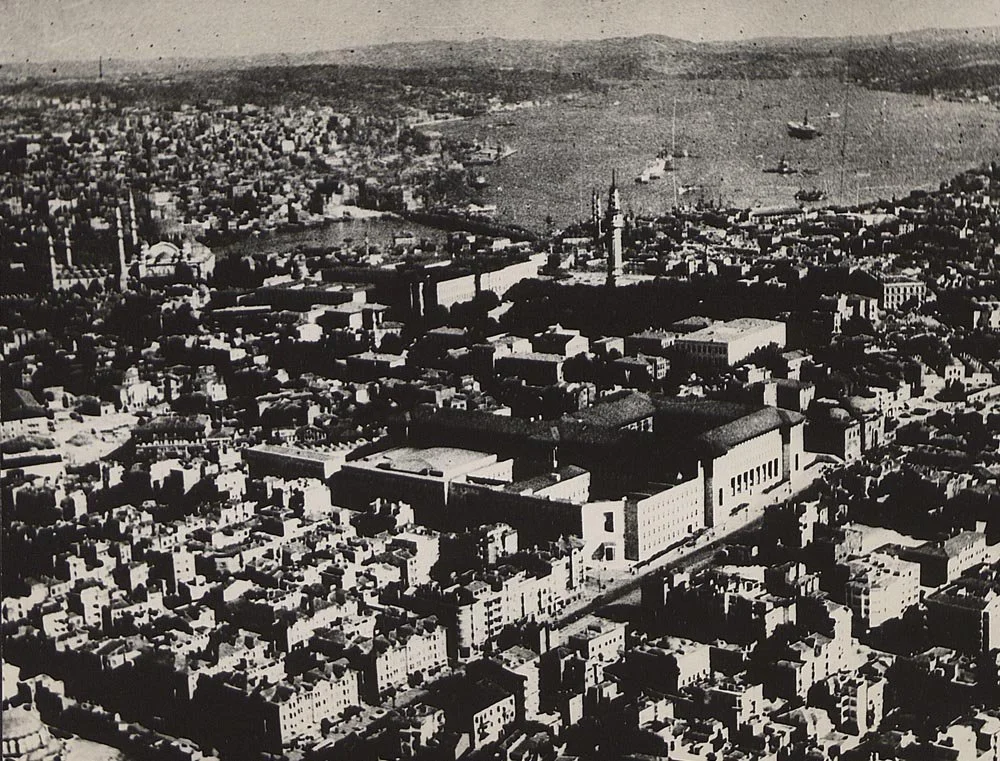
After the Second World War, refugees across Europe gathered in camps for displaced persons, which were quickly built by the Allies to contain one of the biggest humanitarian crises of our time. First administered by the Allied military forces, especially the British and Americans, these camps were later supervised by newly created United Nations agencies: first the United Nations Relief and Rehabilitation Administration (UNRRA), which in 1947 was replaced by the International Refugee Organization (IRO), and later, after 1950, by the United Nations High Commissioner for Refugees (UNHCR), which continues to function to this day (2021).
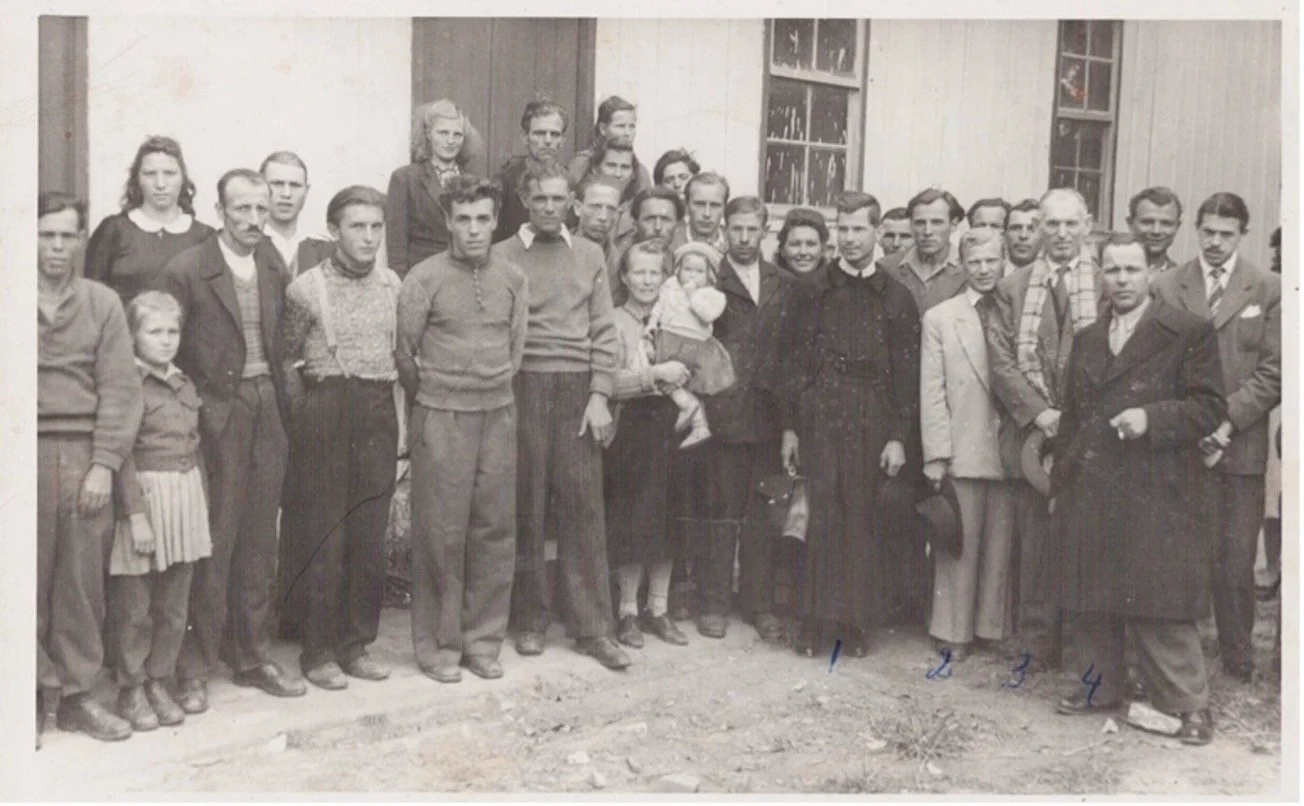
According to Sheila Fitzpatrick (2024), among the many ethnic communities gathered in the camps were Ukrainians, Displaced Persons who not only lost everything during the war, but whom, like other Eastern Europeans, were considered “Soviet citizens” from the perspective of the leaders of the Union of Soviet Socialist Republics (USSR) and were therefore obliged to return to the Soviet Union.
At the war’s end, their homeland was occupied, and many had been made prisoners or forced labourers. While repatriation had been the preferred option of UNRRA, the IRO – and later UNHCR – understood that this was no longer possible for this demographic and started to search for resettlement places in traditional immigrant societies instead. Especially in the Americas, as explained by the historian Laura Robson (2023), resettlement provided durable solutions for the post-World War II displaced people in the camps. Ukrainians often chose resettlement in Brazil.
Brazil today, alongside Canada and the United States, hosts one of the largest Ukrainian communities outside Ukraine. Since the end of the 19th century, it has been home to a culturally rich Ukrainian community. The Brazilian historian Oksana Boruszenko (1969), claims that Ukrainian immigration to Brazil can be divided into three moments, the first one being in the 19th century, the second after World War I, and the last massive movement precisely post Second World War. These first immigrants settled mainly in the South of Brazil, especially in the State of Paraná, and formed important colonies, such as the city of Prudentópolis, informally known as “Brazilian Ukraine.”
Already counting with an established community on Brazilian ground, the immigrants and Ukrainian leaderships, after World War II, found it necessary to provide aid to Displaced Ukrainians in Europe, and therefore, they founded what it would be, in the years ahead, the main Ukrainian committee in Brazil. On October 9th, 1945, Ukrainian Committee of Aid to the War Victims was established. Located in the city of Curitiba, capital of the State of Paraná, the committee supported Ukrainians in the camps, through clothes, food, and money that was sent abroad. Most importantly, the committee also facilitated resettlement and immigration, aiding the arrival of Ukrainians, and their settlement in Brazil.
At the time, the Ukrainian Committee received over three hundred letters, handwritten almost entirely in Ukrainian, by the refugees in the camps, and addressed to the Committee in Brazil. These letters are now being translated into Portuguese (by the Ukrainian Society of Brazil, through the project Ukrainian Memory), and in their content, can exemplify the desperation of the refugee condition. Some letter-writers requested aid in the form of clothes and food, others asked for relatives in South America or the possibility of emigrating to Brazil, and some simply wanted to talk, tell their stories, and be “heard,” even from across the ocean.
One of them, for example, written by the Ukrainian Taisa Binkivska, at Regensburg’s camp, in Germany, in the year 1948, and addressed do the Brazilian Committee, tells a story of suffering and disposal, and her dramatic situation at the camp:
To the Ukrainian Committee in Brazil. First of all, I apologize for disturbing you with my letter and for taking a little of your time for reading it. I am in Germany since 1942. In that year, they took me for forced labor. I am completely alone, for my father was arrested by NKVD and sent to Siberia for 15 years, where he probably endured only one year. For this, I ask that you help me in any way you can (clothes or food), because I want to continue my studies, which for me is being very, very hard. If I didn’t study, I wouldn’t ask for help, but yes, studying I will be a useful citizen for my homeland, and if there is not any possibility of returning to Ukraine, even if abroad, I as a nurse, can help my brothers and sisters, working in some clinic. I ask that you don’t refuse my request, for I will be very and sincerely grateful. With regards, Taissa Binkivska, Regensburg 02/08/1948 (Ukrainian Society of Brazil).
These letters can show different aspects about their lives in the camps, and expectations about Brazil, since they often asked about the job situation on the territory. Like the one written by Oleksa Holovko, from a camp in Germany, where – beyond introducing himself, his craft (Florestal Science), and explaining the situation that he and his wife were in – he asked:
[…] maybe I could not find work in Brazil, where there are so many forests? Surely, you have contact with other Ukrainian organizations in Chile, Peru, Bolivia, Paraguay, Uruguay, and so on. At the moment, could you help us to leave Europe, or could you transmit this letter to any other Committee? On the other hand, I truly ask that you write to me about how the Ukrainians live and work in South America. With sincere respect, Oleksa Holovko, Germany, 05/17/1946 (Ukrainian Society of Brazil).
Apart from the solidarity amongst Ukrainians on European camps and in Brazil, there were other motives that contributed to the immigration politics of the region. Ukrainian resettlement to Brazil after the Second World War was not simply the result of humanitarian generosity but the convergence between national ambitions, international projection, and local committees that mediated refugees’ expectations, needs, and mobility options.
Brazil’s openness to Ukrainian immigration in the late 1940s coincided with a political transition following the end of the Estado Novo regime, a period of censorship and repression led by the former Brazilian President, Getúlio Vargas (2013). The new government, under the presidency of Eurico Gaspar Dutra, combined international alignment in the United Nations, with their own domestic ambitions of economic development, creating a window in which refugee resettlement became politically acceptable.
The Ukrainian Committee functioned through measures of assistance, that included aid for immigrants that travelled to Brazil, visiting other communities, raising provisions and money to send abroad. Also, for resettlement purposes, they kept close contact with camp authorities, asking about the situation of the Ukrainian community in the camps, and to define which ones they were able to help in matters of immigration.
For this matter, national partnerships emerged, but the strongest one was with the Brazilian Red Cross, that provided periodical help, with stockage, material, and contacts that could help with continental transport. The requests for immigration were evaluated by the government and if the potential immigrant was accepted, the Committee was responsible to grant them a job and a place to stay when they arrived in Brazil – what usually meant, working in cities like São Paulo or Curitiba, on farms, or settling themselves in Ukrainian communities that were already established.
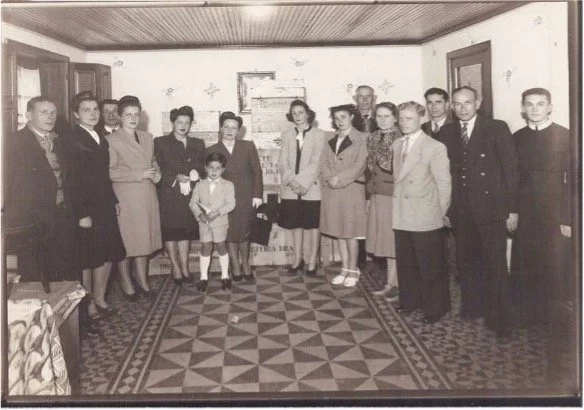
Ukrainian Committee delivering donations to the Red Cross Committee in Brazil – 1947. Courtesy of Archives of the Ukrainian Society of Brazil.
The letters exchanged between Ukrainian displaced persons in Europe and the Brazilian Aid Committee reveal resettlement not as an abstract solution designed by international agencies, but as a negotiated, expectation-driven process shaped by diaspora infrastructures. Refugees wrote not only to ask for aid, but to imagine futures, inquire about work, and assess whether Brazil could become a viable place to rebuild their lives. In turn, the Committee translated these expectations into concrete pathways — mobilizing local networks, negotiating with state authorities, and directing newcomers toward specific regions and forms of labor.
Seen from this perspective, the emergence of a large Ukrainian community in southern Brazil after the Second World War was neither accidental nor inevitable. It was the outcome of mediated mobility, in which letters functioned as bridges between displacement and resettlement. Paying attention to these exchanges allows us to understand how global refugee regimes operated on the ground — and how refugees themselves actively shaped the geographies of their own resettlement.
Suggestions for further reading
BORUSZENKO, Oksana. A imigração ucraniana no Paraná. Simpósio Nacional dos Professores Universitários de História, 1967, Porto Alegre. São Paulo: [FFCL]-USP, 1969.
FITZPATRICK, Sheila. Lost Souls: Soviet Displaced Persons and the Birth of the Cold War. Princeton: Princeton University Press, 2024.
NASAW, David. The Last Million: Europe’s Displaced Persons from World War to Cold War. London: Penguin Books, 2021.
NETO, Lira. Getúlio (1930-1945): Do governo provisório à Ditadura do Estado Novo. São Paulo: Companhia das Letras, 2013.
ROBSON, Laura. Human Capital: A history of Putting Refugees to Work. London: Verso Books, 2023.
Funding: This Research is funded by Coordenação de Aperfeiçoamento de Pessoal de Nível Superior (CAPES), and Conselho Nacional de Desenvolvimento Científico e Tecnológico (CNPq), both in supervision of the Government of Brazil, as the main organisms that foment science and technological development in the country.