UNHCR Archives: A History of Access - is Access Now History?
This post is by the UNHCR Records and Archives section. It updates and supersedes two earlier posts on the UNHCR archives that we published in May 2024 (linked here and here).
UNHCR Archives has temporarily closed its reading room to external researchers. Here is what that means for access, research, and the future of digital delivery.
Twenty-five years of access
For twenty-five years, public access to UNHCR’s archives has transformed a body of operational records into a source of evidence, accountability, scholarship and personal memory. Since the opening of the archives in 2000, demand from external researchers has grown steadily, while internal use has also increased as colleagues seek historical precedent for protection, legal, operational and advocacy work.
From Sadako Ogata’s original vision of an open archives service to the present day, access has not been a peripheral activity, but a practical means of turning UNHCR’s recorded memory into knowledge that supports decision-making, research and makes the history of displacement accessible to those who lived through the events documented in the archive.
Crisis and closure
In January 2026 however, UNHCR Archives closed its reading room to external researchers. For historians, students, filmmakers, legal researchers, members of displaced communities and families seeking traces of their own histories, this was not simply an administrative change. It marked a pause in physical access to one of the world’s most significant humanitarian archives.
The immediate cause was the severe funding crisis facing UNHCR. In 2025, the organization experienced a catastrophic collapse in financial support, leaving a 1.3 billion dollar shortfall against humanitarian needs. The impact on vulnerable displaced communities has been devastating.
The crisis also brought major changes to the UNHCR Records and Archives Section. In October 2025, the Section moved under the management of the Global Data Service, aligning records and archives work more closely with evidence-based advocacy and decision-making. At the same time, staffing was reduced by more than half, with several familiar colleagues in Geneva and elsewhere leaving the organization or taking early retirement.
Records on the move
For the small remaining archives team, the workload changed overnight. Office closures, staff departures and system decommissioning triggered a sudden surge of records transfers, in both physical and digital form. Keeping control of UNHCR’s information on the move has become a major logistical and technical challenge, requiring close cooperation with colleagues in field operations, data, infrastructure and IT functions.
Under this extraordinary pressure, the UNHCR Archives reading room closed to external research as of January 2026. No new appointments are currently being taken because the team does not have sufficient capacity to support retrievals, large-scale declassification, researcher supervision and reshelving. We had hoped to reopen around mid-year once the immediate transfer workload eased. However, further staff reduction measures, combined with uncertainty surrounding availability of infrastructure for the physical archives once UNHCR leaves its current headquarters building, have extended the closure period.
We sincerely regret this loss of research access and remain hopeful that it will be temporary.
Does this now mean the archives are inaccessible?
Not entirely. The doors of the reading room may be closed for now, but UNHCR Archives is not entirely closed to research. We have retained enough processing capacity to continue our digital delivery service, first piloted during the COVID-19 shutdown in 2020. Researchers can contact us by email to request up to five files at a time from our catalogue. Approved files are added to a digitization queue and delivered as PDF copies through a download link. This allows us to maintain our commitment to UNHCR’s archival access policy, even in difficult circumstances.
Partnership support for digital delivery
This service has remained possible thanks to a cooperation agreement with the Masaryk Institute and Archives of the Czech Academy of Sciences and the Unlikely Refuge? Project. Their generous sponsorship of an internship within the UNHCR Records and Archives Section has allowed work on cataloguing and digital access to continue, despite wider cuts to the service. We are deeply grateful for this solidarity and practical partnership.
There is also a more ambitious digital future in view. The Government of Luxembourg has funded a pilot project to strengthen our infrastructure for digital delivery of archival content. The aim is to build innovative but practical tools that can help us process and deliver archival material more efficiently, compatible with larger digitization projects that might be funded in future. In other words, we are beginning to reimagine the physical reading room as a Digital Reading Room: online, scalable, and accessible to researchers who may never be able to travel to Geneva, including members of affected communities facing visa restrictions or prohibitive travel costs.
Why partnerships matter now
Partnerships will be essential to what comes next. UNHCR Archives is working to generate collaborations that can help restore some of the capacity lost through the financial crisis. Our engagement in the Humanitarian Archives Emergency project, and our coordination with other UN agencies to explore shared challenges, synergies and solutions, reflect our determination to secure, preserve and make accessible one of the world’s most important humanitarian documentary collections — preserving not only institutional memory, but the documented lives of millions of people shaped by displacement.
If you are a researcher, memory institution, university, technical partner, consortium builder or funder interested in archival access, digitization or humanitarian history, we would welcome a conversation. The reading room may be closed for now, but the work of preserving and opening UNHCR’s archives continues. Please feel free to reach out to us directly.
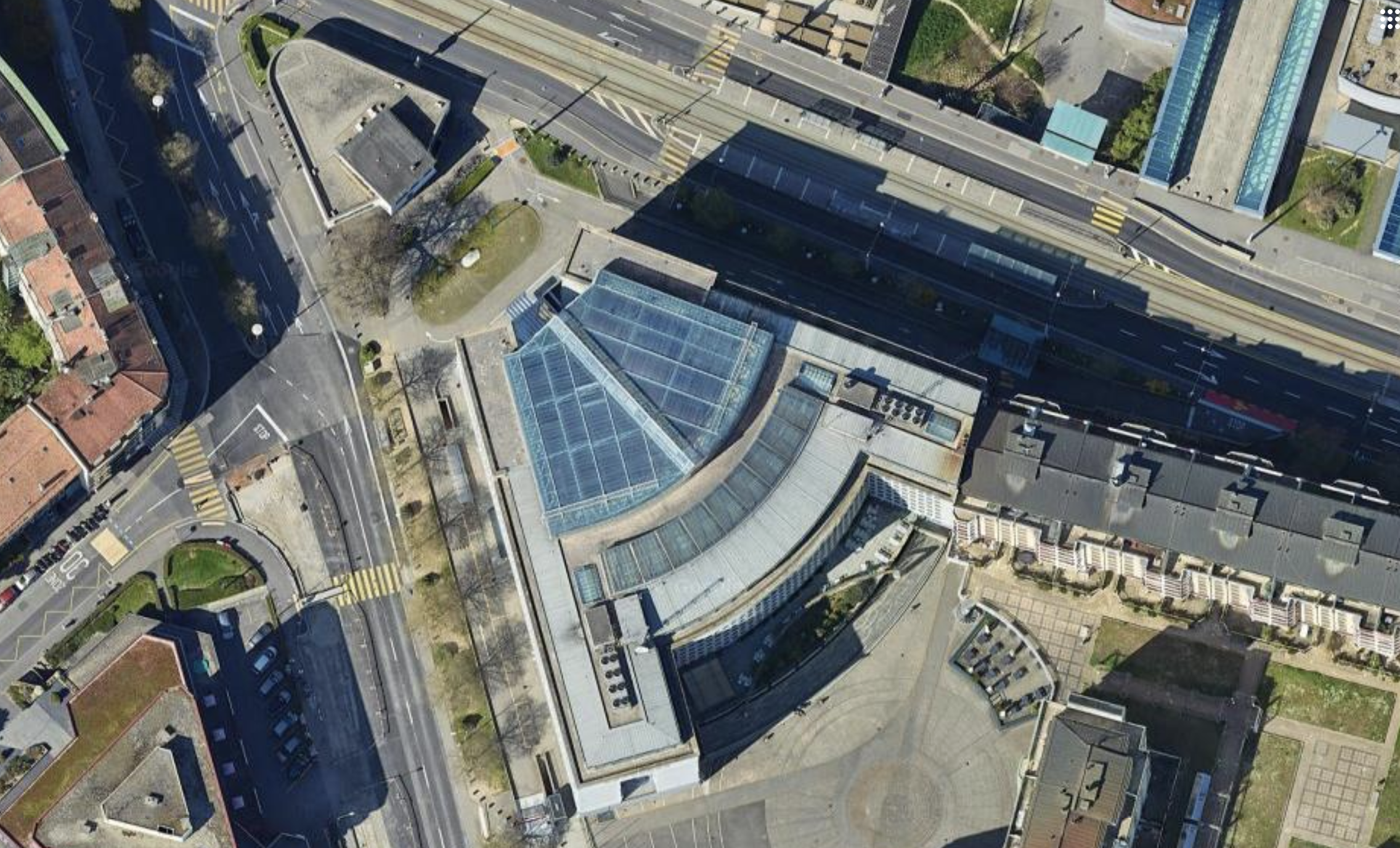
The banner image is a vertical aerial view of the UNHCR building in Geneva.