Refugee connections – call for papers

We are pleased to announce that the ‘Doing Refugee History’ series will continue this year with two roundtables. The first will explore the subject of refugee connections and will take place on Thursday 20 October 2022, 2-4pm UK time.

As displaced people, refugees are often assumed to be disconnected—to have lost their connections to the places, people, and things that matter to them. Humanitarian programming in first countries of refuge, and refugee integration strategies in resettlement countries, aim to create new economic and social connections for refugees. But what connections have refugees, over time, made for themselves?

Time for a convention on internal displacement? The history of the internal displacement protection regime

Relative to other forced migrants, refugees are in a privileged position in international law: they have legal status, rights under the 1951 Refugee Convention, and a specific organisation dedicated to their protection (UN High Commissioner for Refugees). Internally Displaced Persons, or IDPs, have a much less developed protection framework, even though the global population of IDPs is 59.1 million. So what explains this difference of treatment between these two categories of forced migrants?

Waves of migration: a Vietnamese refugee boat journey in numerical modelling and oral history

The journeys of people who have been forced to leave their homes have, over centuries, included travel across water, including rivers, oceans, and seas. This post presents a new approach to researching refugee boat journeys by sea, based on a collaboration between historians and ocean engineers. We have used oral history research with survivors of a particular boat, rescued off Vietnam in June 1982, alongside numerical modelling so that the sea state the boat travelled through and the specific movement of the boat in those conditions could be determined. The scientific analysis explains how the ocean and weather, paradoxically, both created the conditions that were dangerous for this vessel, but also placed it in a position where it was rescued.

UNHCR’s first urban refugee policy, 25 years on

On 25 March 1997, the United Nations Refugee Agency (UNHCR) released its first global policy relating to urban refugees. Though UNHCR had always worked in towns and cities since its establishment in 1950, the agency itself viewed this work as peripheral to its main mission. By the 1980s and 90s the organisation had become firmly associated with large rural camps on the borders of states. A landmark piece of global refugee policy, the UNHCR Comprehensive Policy on Urban Refugees put down on paper for the first time a single, though contextual, approach to working in urban areas. But the March 1997 policy came under immediate criticism, and lasted less than nine months.

Trickster narratives in the memoirs of Germans displaced from Eastern Europe, 1944-48

Trickster narratives are particularly useful in exploring the complexities of refugee histories. Refugees are often marginalised and portrayed as either one-dimensional ‘innocent’ victims or as a threatening ‘other’. Analysing such narratives allows for more nuanced understandings of how refugees negotiate power relations and enact agency. Refugee trickster narratives communicate difficult and exceptional experiences through stories that are commonly recognised, thus highlighting their shared humanity and helping to break down stereotypes. Most interesting is the prevalence of the trickster narrative through time and across cultures, as it reveals a deep human impulse to tell stories of triumph in the face of physical and social marginalisation.

Refugee-adjacency and the unrecognised grief of those left behind, part 2

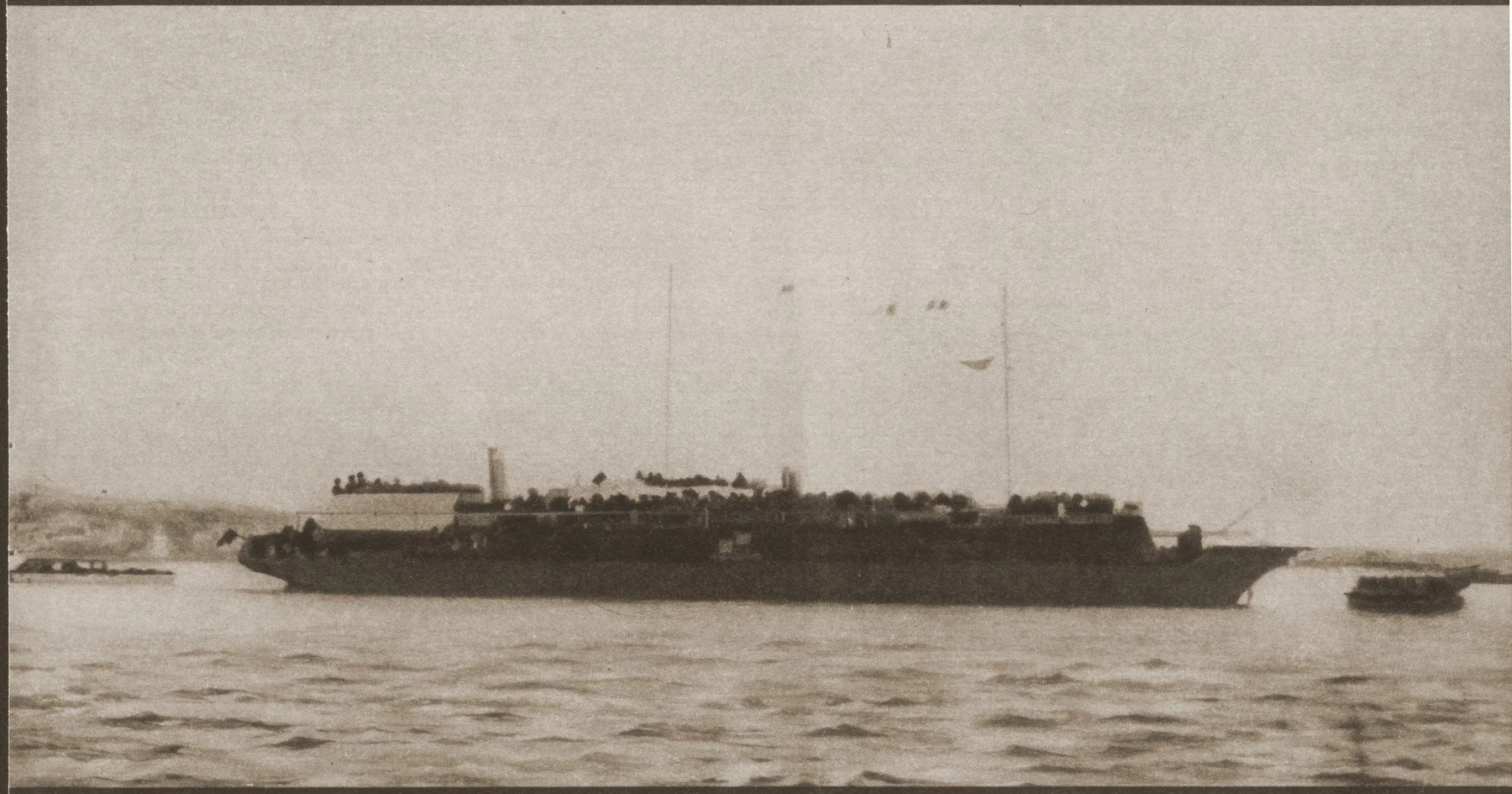
What does it mean to be ‘refugee adjacent’? The first part of this post told the story of Doris, a young Jewish woman who came to Palestine from Romania in 1941. Her family and fiancé died before they could join her when the vessel they were travelling on, the MV Struma, was torpedoed off Istanbul in February 1942. Doris was left destitute. Unlike her family, Doris was never a refugee: a British subject by birth, she had come to Palestine on a tourist visa and was eventually repatriated to Britain. But her proximity to refugeedom is obvious, in the loss of her home in Romania and the possibility of a home in Palestine, in the loss of her material possessions, and in the loss of her family, all refugees when they died. This second post tell the story of Ahmad, another refugee-adjacent individual, who left Palestine a few years after Doris.

Refugee-adjacency and the unrecognised grief of those left behind, part 1

Historians have often explored what it means to be a refugee. But what happens to refugee history when we consider how and with what consequences people do not become labeled as refugees? This two-part blog post tells the story of two individuals who might have been refugees, but didn’t: a young Jewish woman who left Romania for Palestine in the early 1940s, and a young Muslim man who left Palestine a few years later. They are ‘refugee-adjacent’ individuals: people whose families became refugees or forcibly displaced persons, but who themselves did not. A refugee-adjacent individual has not been labelled as a refugee or displaced person. But they are deeply affected by what Peter Gatrell has termed refugeedom.

Precarity of welcome: review of Becky Taylor's Refugees in Twentieth-Century Britain

In her book Refugees in Twentieth Century Britain, Becky Taylor carefully explores the reception, experiences and significance of refugees in Britain across the twentieth century. Time and time again, she demonstrates how closely bound up the refugees’ lives have been with the British public’s own experiences of changing political and social factors, whether these two groups come face to face or not, and however much of a gulf the media may lead people to believe exists between ‘us’ and ‘them’. Making sense of a huge range and diversity of sources, the book beautifully demonstrates the complexities and contradictions of British society, and the many ways refugees encountered these complexities.

Humanitarianism in Newfoundland: the rescue of Tamil refugees in 1986

On 11 August 1986, after five days adrift off the coast of Newfoundland, two lifeboats carrying 155 Tamil refugees fleeing the armed conflict in Sri Lanka were rescued by local fishermen. A fast-track refugee decision process that allowed them to be issued renewable one-year permits enabling them to live and work in Canada. The decision to grant Minister’s permits was controversial, especially when it emerged that the refugees had departed from West Germany, a ‘safe state’. But on the whole, media discourse was welcoming. This post revisits the incident in the light of present-day refugee policy in Canada and elsewhere.