Jewish Academic Solidarity in Turkish Exile
In early 1935, the National Socialist regime forced the German-Jewish Assyriologist Benno Landsberger (1890–1968) out of his position at Leipzig University. When the professor of Assyriology received notice of his retirement, he read that the regime tried to justify his dismissal through the ‘Law for the Restoration of the Professional Civil Service.’ The letter left Landsberger shocked and dismayed. He faced his unexpected retirement with surprise, fear, and despair, leading him to accept a professorship in Ankara.
Landsberger was one of many dissident Jewish scholars forced out of German universities due to racist and anti-Semitic National Socialist policies. Many academics faced persecution and sought refuge by reaching out to universities and potential employers globally. Initially, mainly well-known scholars were accepted by host countries. A transnational network emerged to assist displaced academics. Charity organizations evolved into ports of call for assisting with their selection and mediation. Key individual actors provided applicants with reference letters and universities sought to recruit suitable candidates. The selection process was rigorous, considering various factors shaped by the political, legal, and cultural contexts of the host countries.
In this period, Türkiye became an unexpected haven where displaced academics formed important networks of self-help and financial support. The German-Jewish pathologist Philipp Schwartz (1894–1977) emerged as a leading figure in the ‘Notgemeinschaft Deutscher Wissenschaftler im Ausland’ (Emergency Committee of German Scholars Abroad). The charity organization’s mission was to secure professional prospects for a significant number of academics who were persecuted in Nazi Germany. In the spring of 1933, Schwartz left his position at the University of Frankfurt and fled Nazi persecution, first seeking refuge in Zurich with his in-laws. Despite the temporary safety, he faced alarming reports of the oppression of scholars in Germany. Recognizing the need for action, Schwartz partnered with other German-Jewish professors who found shelter in Switzerland. Together with Max Born (1882–1970), Kurt Goldstein (1878–1965), and Siegfried Walter Loewe (1884–1963), he established a ‘Beratungsstelle für deutsche Wissenschaftler’ (Council for German Scholars), which soon evolved into the ‘Notgemeinschaft für Deutsche Wissenschaftler im Ausland.’ With guidance from the Swiss Jew Josef Messinger (1880–1950), the organization collaborated with Swiss educational reformer Albert Malche (1876–1956) to secure academic positions for displaced scholars in Türkiye.
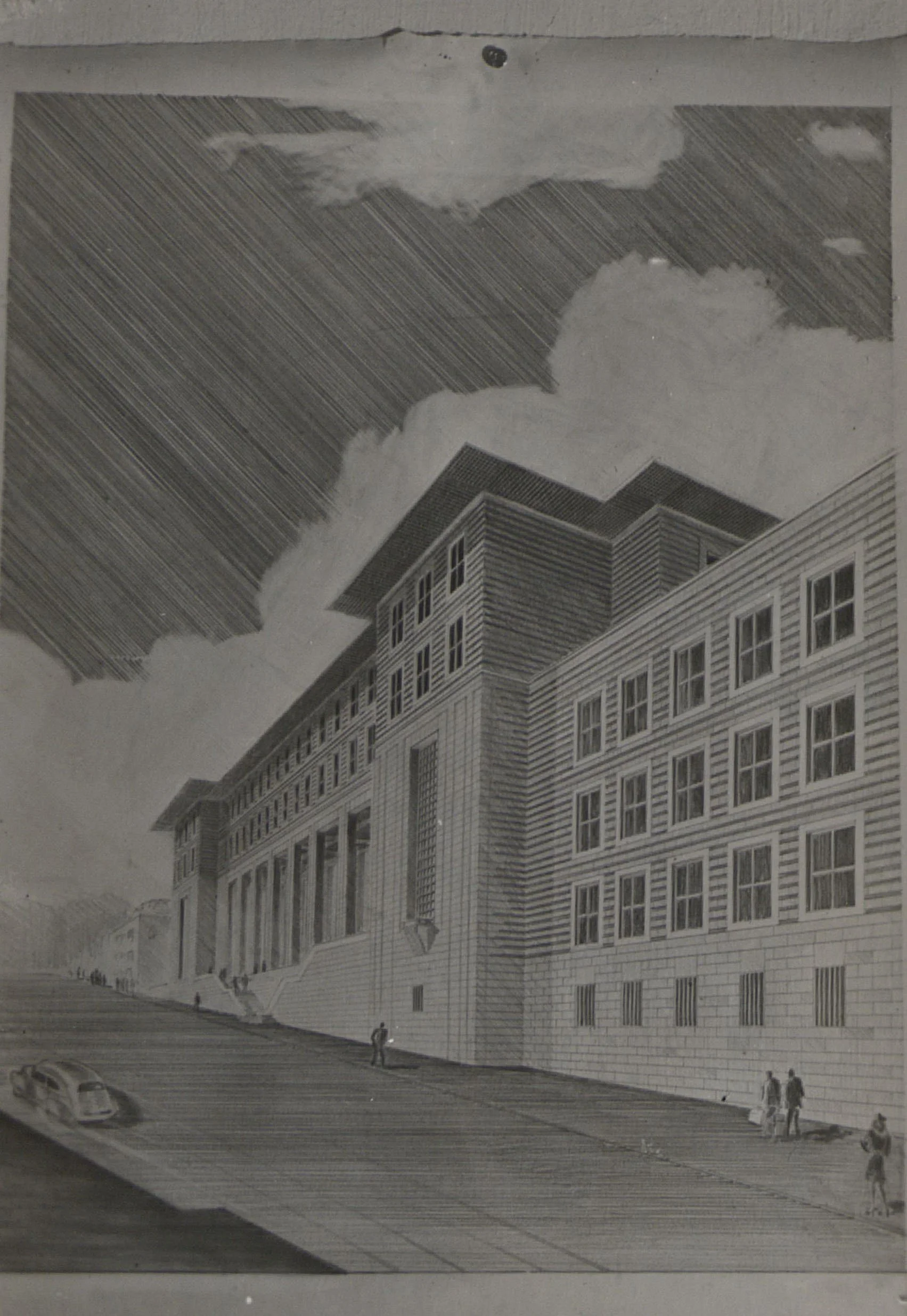
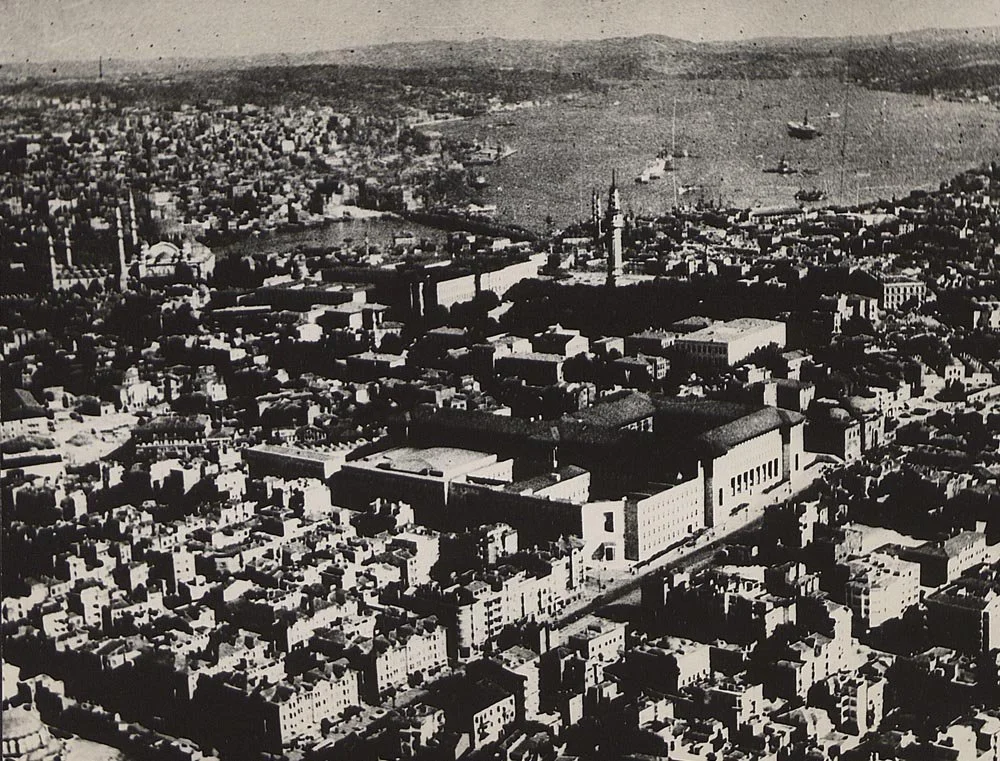
Faculties of Science and Literature, Istanbul University. Courtesy of Salt Research.
Malche’s and Schwartz’s negotiations with the Republic’s Minister of National Education, Reşit Galip (1892/93–1934), led to the hiring of thirty professors. The outcome catalysed reforms in Turkish higher education: On August 1, 1933, İstanbul Üniversitesi (Istanbul University) opened its doors, employing twenty-seven Turkish and thirty-eight foreign professors. During the first months, eighty-five refugees were appointed to roles such as professors, heads of institutes, and advisors to ministries within Türkiye. The Kemalist government in Ankara supported this program with 2.4 million Turkish pounds until 1938, hosting approximately 800 German-speaking experts between 1933 and 1945. Most of them stayed only a short time before moving to more preferred host universities and research institutes in the UK or the USA. Eventually, Schwartz relocated to Istanbul as Head of the Department of Pathology at İstanbul Üniversitesi, where he continued aiding fellow exiles as a liaison and representative of the ‘Notgemeinschaft.’ His efforts exemplified the proactive role of refugee scholars in creating opportunities despite the challenges of exile, as illustrated by the cases of Benno Landsberger and his former student Fritz Rudolf Kraus (1910–1991).
In 1935, shortly after arriving in Ankara, Landsberger began networking with the Turkish government, notably with Cevat Dursunoğlu (1892–1970), General Advisor for Higher Education. He successfully secured a Hittitology professorship in Ankara for Hans Gustav Güterbock (1908–2000), who faced challenges in Germany due to his Jewish descent. However, helping another former student, Fritz Rudolf Kraus, proved more difficult. Stigmatized as a so-called ‘half-Jew’ in Germany, Kraus struggled to find employment. Landsberger used his connections to secure Kraus a ten-month contract at İstanbul Arkeoloji Müzeleri (Istanbul Archaeological Museums). Despite initial concerns over the short contract, Landsberger encouraged him to accept and provided essential support, including local contacts and financial assistance, until Kraus received his first salary. By this time, Landsberger had spent two years in Türkiye, navigating the complexities of a new work environment and establishing influential connections. He also offered practical advice to Kraus, urging him to improve his French and purchase Turkish textbooks. In many instances, refugee scholars were instrumental in welcoming new arrivals and helping them adjust to their new environments. Landsberger intended to implement this practice, but by the time Kraus was preparing, it was uncertain whether he could reach Istanbul from Ankara in time to greet the newcomer. As a precaution, he suggested assigning a displaced student from Germany to assist Kraus, who arrived in Istanbul on July 28, 1937, and began work in the museum shortly thereafter.
During his exile, Kraus faced increasing financial difficulties due to the temporary and poorly compensated nature of his contracts, leading him to rely on external support. He highlighted these struggles in his letters to Landsberger, reflecting a disparity between the precarious circumstances of research assistants and the privileges enjoyed by well-compensated professors. Kraus mentioned the pathologist Philipp Schwartz, whom he had not previously contacted, expressing uncertainty about a fund he believed Schwartz had established to assist refugee scholars. He voiced reluctance to reach out for help but noted he could survive on a smaller salary. Landsberger responded promptly, stressing the need for a similar fund in Ankara, urging Kraus to gather more information about Schwartz’s financial reserve. Eventually, Kraus met Schwartz on July 2, 1940, and learned that monthly contributions from German professors sustained the fund, though most contributors were unaware of how the money was allocated. Schwartz revealed that only his colleague and co-founder of the ‘Notgemeinschaft,’ Hans Winterstein (1879–1963), knew specific details about the fund’s distribution, which aimed to support and assist scholars as well as non-academic refugees who had exhausted all other resources. Despite his hesitance to seek help, Kraus ultimately followed Landsberger’s advice to request a loan from Schwartz after encouragement from fellow refugee scholars. This assistance helped him navigate his financial difficulties. Through Landsberger’s connections at the Turkish Ministry and İstanbul Üniversitesi, Kraus secured an additional appointment, allowing him to repay the loan of the ‘Notgemeinschaft.’ Landsberger assured Kraus that as long as the circle of exiled professors in Turkey remained safe, he would not perish and would likely be able to earn a living.
The initiatives led by Schwartz in Istanbul and Landsberger in Ankara illustrate the important role of self-help organizations and the agency of refugee scholars in Türkiye during the 1930s and 1940s. By establishing financial assistance funds sourced from the salaries of refugee professors, displaced scholars provided essential resources to those in need and created networks that facilitated employment opportunities. Despite the power asymmetries within the refugee scholar community, their efforts reveal the potential of collaborative initiatives to address shared challenges, highlighting the importance of community-driven actions in forming support networks during exile. Although members of these initiatives sought to develop close ties with the Turkish government, they operated, to some extent, independently of state agencies regarding self-help and relief operations. Nevertheless, they did rely on the support of Muslim Turkish colleagues and civil servants. Together, they formed a network of mutual solidarity that enabled other refugees – regardless of their religion or reasons for persecution – to receive financial assistance and even enter into contractual agreements while in exile.
Suggestions for further reading
This post draws on material from Jan Schmidt: Dreizehn Jahre Istanbul (1937–1949). Der deutsche Assyriologe Fritz Rudolf Kraus und sein Briefwechsel im türkischen Exil (Leiden/Boston 2014).
Corry Guttstadt, Turkey, the Jews, and the Holocaust (Cambridge 2013).
Isabella Löhr, ‘Solidarity and the Academic Community: The Support Networks for Refugee Scholars in the 1930s,’ Journal of Modern European History/Zeitschrift für moderne europäische Geschichte/Revue d’histoire européenne contemporaine 12/2 (2014), 231–246.
Luděk Vacín with Jitka Sýkorová, The Unknown Benno Landsberger. A Biographical Sketch of an Assyriological Altmeister's Development, Exile, and Personal Life (Leipziger Altorientalische Studien 10, Wiesbaden 2018).
Declaration
Research for this blog post was conducted at the Leibniz Institute for Jewish History and Culture – Simon Dubnow in Leipzig. Funded by the Alfred Landecker Foundation, this study is part of my project, “Flight of Knowledge: Forced Migration of Jewish Scholars to Europe, America and the Middle East, 1933–1945.”