CFP - Historicising Boat Refugees: Navigating Between Open and Closed Seas
Readers: see below for details about how to submit proposals for a June 2026 conference at University College Dublin focused on refugee maritime migration.
8-9 June 2026, University College Dublin
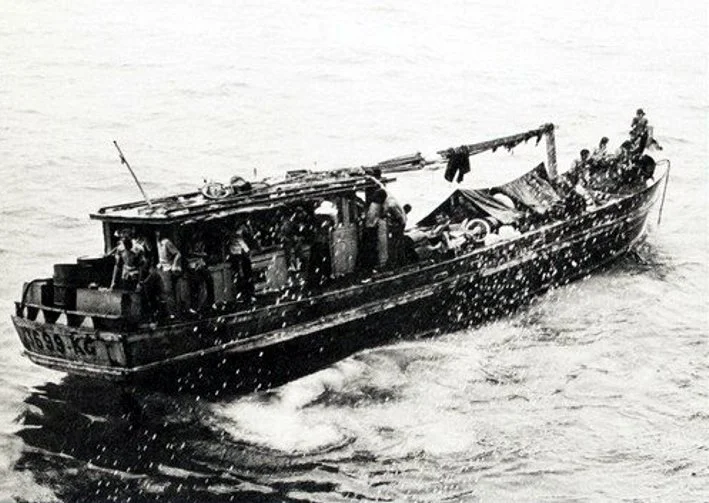
Over one million refugees crossed the Mediterranean in 2015. However, this was not the first time that people took to the seas in search of asylum. In the 1940s, tens of thousands of Jewish boat refugees tried to flee Europe by sailing on the Mediterranean to what was then British Palestine. In the 1970s and 1980s, nearly one million so-called ‘boat people’ turned to the South China Sea in a bid to escape Vietnam. During the 1980s and 1990s, hundreds of thousands of Cubans and Haitians tried to reach the US by crossing the Caribbean. In recent decades, the number of boat refugees has increased dramatically, and different maritime migration routes have opened all over the world. To understand the dynamics of maritime migration, one must take account of the historical transformations of oceanic spaces and how they could be simultaneously used to facilitate and restrict escape. Refugee journeys have constantly been re-routed through the construction of material and immaterial borders at sea, as well as through encounters with state and non-state actors. Despite the presence of so many obstacles and dangers, refugees have continued to undergo such liminal and formative journeys by navigating open and closed seas in search of sanctuary.
We welcome papers that pay particular attention to what occurred at sea and that engage with some of the following questions and themes:
What kinds of experiences did refugees have at sea?
How did ethnicity, class, gender, religion, sexuality and capital influence what took place on board boats carrying refugees? Did these factors also influence refugees’ interactions with other vessels?
What environmental and political factors shaped the risks encountered in refugee journeys?
How did states respond to boat refugees at sea? What role did public opinion play?
Beyond states, what other actors did boat refugees encounter on their journeys, such as NGOs, merchant vessels, fishing vessels, pirates, and ‘smugglers’?
What type of vessels did boat refugees use and why?
What kind of experiences did boat refugees have in detention centres where many were held after their interception? How was refugees’ association with the sea – their perceived ‘wetness’ – used to hold them outside of standard legal protections and territorial rights?
Did boat refugees attain the sanctuary they sought in their transition to land? How, for example, do the experiences and reception of boat refugees crossing the Mediterranean and Andaman Seas in recent years compare with those in the past?
What factors shaped the granting of sanctuary to some refugees and the detention and/or deportation of others?
If you are interested in participating in the workshop, please send an abstract of 250-350 words by 10 April 2026 (irial.glynn@ucd.ie). Accommodation and travel cost support will be provided.