Prophetstown was a Sanctuary City, Part I
This is the first of a two-part series of posts reflecting on contemporary sanctuary practices and their precedents in Native North America. Click here to read Part II.
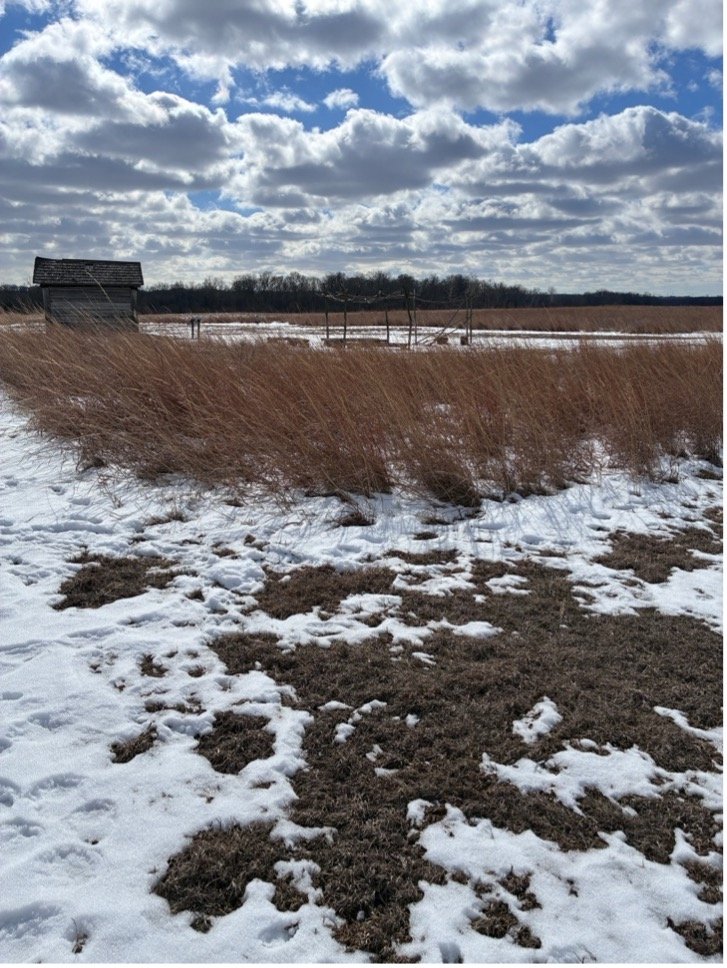
Driving through the prairies of central Indiana last fall, I noticed a sign advertising Prophetstown State Park. On impulse, I took the exit. I had read about this encampment, built in the early 1800s by indigenous people from around the Midwest who were drawn to Prophetstown in the fervent hope of protecting their lands. But I hadn’t been aware of the existence of the park. In the current moment, when so many people are confronting brutal dispossession by federal forces led by the Department of Homeland Security (DHS), I wanted to see and learn from this place.
At home in Milwaukee, I organize with an immigrant-led group, Comité sin Fronteras, to build a community defense network. Our work deploys time-honored sanctuary practices to defend local communities against kidnapping, trafficking, and detention. As it was at Prophetstown, this is the work of creating refuge for people targeted by militarized repression and threatened with deportation from their homes. Around the country, networks like ours have successfully reduced the impact of the violent raids that have particularly targeted cities that have adopted policies to shelter their immigrant inhabitants: sanctuary cities. Nevertheless, Department of Homeland Security agents have kidnapped thousands, separating families and communities. At this writing, federal officers have killed eight people in the course of these depredations. Twenty-three more have died in the for-profit detention gulags run by the Department of Homeland Security.
While the very idea of a sanctuary city has become controversial in an era marked by extreme xenophobia and the demonization of collective action, such places are and have long been a foundational practice for survival throughout the history of colonization and migration in the Americas. In fact, the creation of sanctuary cities predates the founding of the United States as a nation. Sanctuary practices have been a central, if often obscured, part of the history of the Americas.
Almost immediately after European ships brought enslaved Africans to labor in the Americas, maroon communities sprang up to harbor Africans, Europeans, and indigenous people fleeing the harsh regimes of slavery and settler colonialism imposed upon them. Historian Sylviane Diof describes maroon communities as spaces of “movement, independence, and reinvention where new types of lives were created and evolved; where networks were built and solidified, and where solidarity expressed itself in concrete ways that rendered the maroons’ alternative way of life possible.”
Multiracial maroon communities and multi-tribal indigenous encampments like the one at Prophetstown share many aspects of contemporary sanctuary cities. The parallels between these spaces and contemporary community defense efforts illuminate the longevity and elasticity of sanctuary practices and explains why the current regime seeks to demonize them.
As I turned off the highway, signs offered me a choice: I could proceed to the site of the encampment at Prophetstown or visit the battleground at Tippecanoe, where, in 1811, troops led by Indiana Territories governor and later president William Henry “Tippecanoe” Harrison defeated the intertribal gathering before proceeding to burn Prophetstown to the ground. Drawn by the power of the place, I turned towards Prophetstown, cruising the glacial moraine that interrupts the grassy Indiana prairie with gentle hills.
The Treaty of Paris (1783) concluded the American Revolution and drew the boundaries of the new nation well west of the Appalachian Mountains, which had demarked the colonies at the end of the French and Indian War in 1763. In the decades after the revolution, pioneers poured over the mountains into indigenous homelands, making the Ohio River Valley a new frontier of settlement. Particularly after the Louisiana Purchase doubled the land mass of the new nation, these new lands became grounds for political conflict about the expansion of the institution of slavery.
The farms these settlers claimed in the Ohio Valley disrupted longstanding indigenous practices of sharing the land. To the newly minted United States,after 1789 the area was necessary for national security against indigenous, English, French, and Spanish incursions. For indigenous people, American settlement was disastrous.
Hoping to hold the line against US expansion, Indian people from around the country joined the Prophetstown encampment. Much as current sanctuary cities do, they created spaces of refuge that incorporated daily life, spiritual practice, and political education.
Just as contemporary sanctuary practices began in religious spaces, the multinational indigenous encampment featured a strong spiritual aspect. Known in his later years as The Great Shawnee Prophet or “the Open Door,” Tenskwatawa came into his spiritual leadership after a dramatic recovery from years of alcoholism. After surviving a drunken fall into a fire, he began preaching that rejection of Euroamerican imports like guns and alcohol would allow indigenous people to return to their traditional ways, protect them from further displacement, and restore their lands. His prophecies corresponded with those of other indigenous holy figures at the frontiers of settlement, from the pre-Revolutionary War teachings of Neolin, the Delaware Prophet, to the late 19th century revelations of Ghost Dance prophet Wovoka. Each of these prophecies contained spiritual and political aspects and each occasioned the construction of a temporary sanctuary city built by a multinational array of followers, many of them displaced from their homes.
In 1805, people from a dozen tribes in the Midwest travelled to the encampment led by Tenswatawa and Tecumseh at Greenville, Ohio. Ten years earlier, an Indian confederation under Little Turtle signed the Treaty of Greenville, ceding much of the territory that eventually became the state of Ohio. Though Little Turtle signed the treaty hoping for stability and peace, ceding the land displaced many Shawnee, Delaware, Ottawa, Ojibwa, Miami and Potowatomi people, creating more conflict in the region. Many in Little Turtle’s confederation were drawn to the encampment at Greenville. Together, these indigenous denizens of the Ohio Valley fought for the right to remain on their ancestral lands.
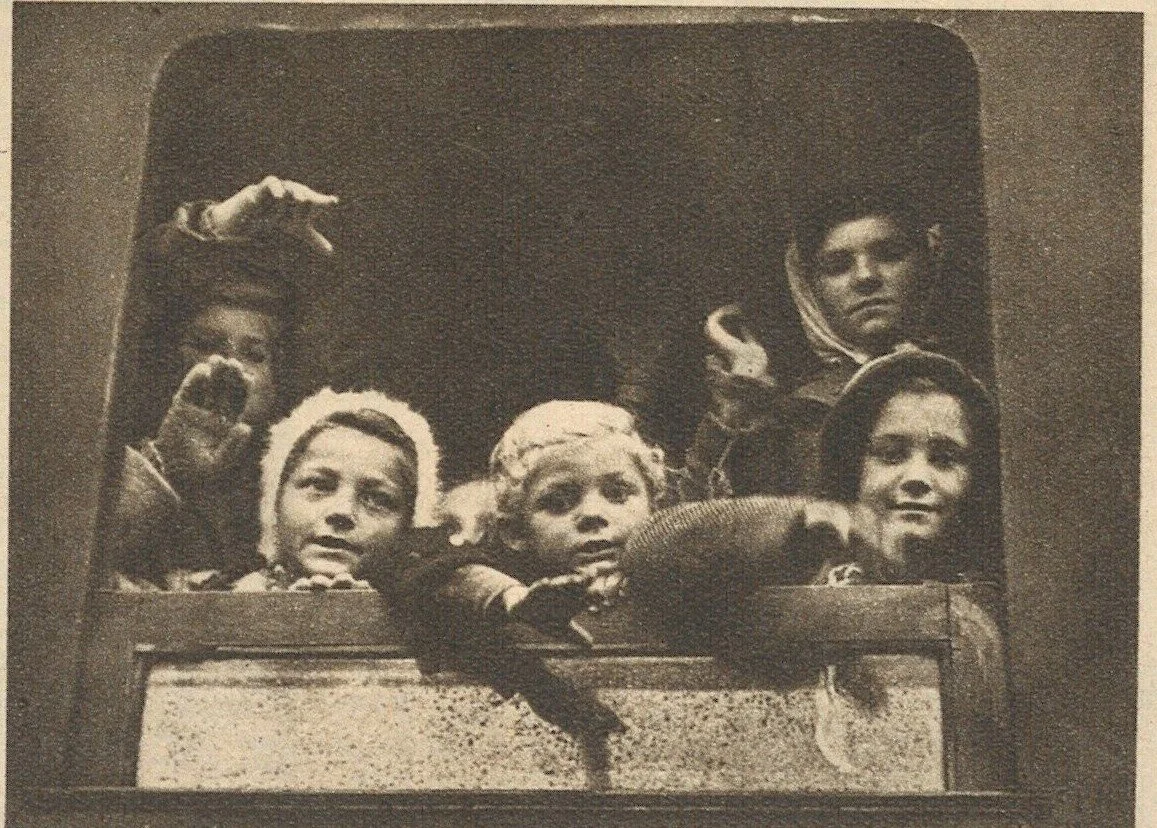
Like the contemporary migrant caravans made up of diverse groups of people walking together through Central America in search of safe harbor further north, many of these travelers had already seen war and environmental destruction in their homelands. In the sanctuary city they created together, there was space for learning from one and other and sharing their stories, for healing.
Works Cited
Tosin Akintola, “Tom Homan’s Plan to ‘Flood the Zone’ in Sanctuary Cities Will Lead to More Due Process Violations,” reason, July 22, 2025, https://reason.com/2025/07/22/tom-homans-plan-to-flood-the-zone-in-sanctuary-cities-will-lead-to-more-due-process-violations/.
Radley Balcoe, “Trump’s Immigration Nightmare, It Is Happening Here,” New Republic, December 24, 2025, https://newrepublic.com/article/204227/trump-immigration-nightmare-happening-here.
Graham Lee Brewer, “Hegseth’s Decision on Wounded Knee Medals Sparks Outrage in Native American Communities,” AP, September 30,2025. https://apnews.com/article/indigenous-wounded-knee-hegseth-honor-173b934465ef1b488986995db66e10e6
Ximina Bustello and Raul Mukherji, “Immigration detention on track for the deadliest year since 2004,”NPR, March 10, 2026, https://www.npr.org/2026/03/10/g-s1-111238/immigration-detention-deaths-custody/
Sylviane Diofe, Slavery’s Exiles:The Story of the American Maroons. NYU Press: New York, 2014.
Sergio M. González, Strangers No Longer: Latino Belonging and Faith in Twentieth-Century Wisconsin, New York: Oxford University Press, 2024.
Melissa Hellman, “Eight people have died in dealings with ICE this year so far. These are their stories,” The Guardian, January 28, 2026, https://www.theguardian.com/us-news/2026/jan/28/deaths-ice-2026-.
“Prophetstown State Park, Interpretive Master Plan,” Indiana Department of Natural Resources, https://www.in.gov/dnr/state-parks/files/sp-prophetstown_interpretive_plan.pdf
Timothy D. Willig, Prophetstown on the Wabash: The Native Spiritual Defense of the Old Northwest , Michigan Historical Review, Vol. 23, No. 2 (Fall, 1997), pp. 115-158.